By continuing to use our site, you agree to our Terms of Service and Privacy Policy. You can learn more about how we use cookies by reviewing our Privacy Policy.

How SmartCap Technology Works: Engineering Behind Chubby Gorilla's One-Motion Child-Resistant Closure System
- September 11, 2026

A brand manager evaluating packaging vendors usually asks the same question first: does this cap actually pass CPSC testing, or does it just claim to? That question sits at the center of every conversation about child resistant closures.
Chubby Gorilla® built SmartCap to answer it with hardware, not marketing copy. This article breaks down what's actually happening inside the mechanism, and why it counts as one of the more engineering-forward approaches to child resistant closures on the market.
What Makes a Closure "Child-Resistant" Under CPSC Standards
Before getting into SmartCap's mechanics, it helps to know what the cap has to survive. The standard doesn't care how a cap achieves compliance. It only cares whether the right panels can open it.
The 16 CFR 1700.20 Testing Panel
In the US, child-resistant packaging is governed by the Poison Prevention Packaging Act and tested against 16 CFR 1700.20. The rule requires a package to resist opening by a defined panel of children under 52 months old while remaining operable by a panel of adults, including older adults with reduced grip strength.
Multiple Paths to Compliance
That distinction matters because it means there's more than one valid engineering path to a compliant closure. Push-and-turn caps, squeeze-and-turn caps, and pop-and-twist designs have all been used to meet the standard.
SmartCap takes a different approach. Instead of asking the user to perform a sequence of separate actions, it uses a spring-loaded suspension that only disengages when the cap is pressed down and rotated at the same time.
A child pressing or twisting alone won't move the mechanism. An adult applying both motions together will.
Inside SmartCap: The Engineering Behind One-Motion Assembly
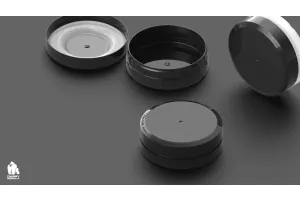
Chubby Gorilla® calls the underlying mechanism a rotational suspension closure, and the name describes what it does. Instead of threading the cap down like a standard closure, the cap sits on a spring that holds it in a raised, disengaged position until the user presses it down.
From Two-Step Caps to One Motion
Most child-resistant caps on the market rely on a two-step interaction: push down, then turn. That usually means the container, the liner, and the tamper band are three separate parts assembled in three separate steps on the filling line.
SmartCap collapses that into one motion. The cap seats, the tamper-evident band locks onto the neck, and the seal forms, all in the same downward press-and-turn action.
For a packaging engineer sourcing child-resistant caps at volume, that single-motion assembly isn't a nice-to-have. It's the difference between a filling line running at rated speed and one that bottlenecks at the capping station.
Spring Suspension and the Push-Retract Mechanism
Press the cap and the spring retracts, dropping the cap's internal threads into contact with the container neck. Only then can the cap be rotated to seal.
Release the pressure before the threads fully engage, and the spring pushes the cap back up, breaking contact. This is why the closure produces the click-slide motion users notice when they open it correctly: the click is the spring re-engaging, and the slide is the threads catching.
Get the sequence wrong, and there's no click, no slide, and no opening. For a product manager comparing suppliers, this matters because the child-resistant mechanism lives in the spring geometry itself, not in a friction fit or a brittle plastic tab that can snap after repeated use.
Springs don't fatigue the same way thin plastic ratchets do. That's part of why SmartCap-equipped containers hold up to repeated opening and closing across a product's shelf life.
Micro-Grip Diamond Surface: Built for Adult Hands, Not Small Ones
The cap's exterior isn't just there for branding. Chubby Gorilla® textures the surface with a 360-degree micro-grip diamond pattern, which does two things at once.
It gives adult hands enough purchase to apply the rotational force the spring mechanism needs. And it does that without relying on a large cap diameter that would make the closure easier for a child to grip and manipulate.
The texture is a grip solution sized for the mechanical requirement, not an aesthetic add-on.
Tamper-Evident Band Application in the Same Motion
Here's where SmartCap earns the "all-in-one" description Chubby Gorilla® uses for it. On most packaging lines, the tamper-evident band is a separate component, shrink-wrapped or heat-sealed onto the container after the cap is applied.
Why a Separate Tamper Band Slows Down Filling Lines
A separately applied band means a second machine and a second pass through the line. It's also a second point where the line can jam.
How the Lock-On Band Engages
SmartCap applies its lock-on tamper-evident band during the same press-and-rotate motion that seals the container. As the cap seats, the band catches onto a ridge at the container neck and locks in place.
The band includes a break-off feature, so removing it the first time leaves a visible, physical sign the container has been opened. For a brand shipping regulated products through multiple distribution points before reaching the end customer, that visible break is often the first line of defense against a tampering claim.
It costs nothing extra in labor because it happens automatically at the capping step.
Why Gapless Surface-Seal Matters for Product Integrity
A cap can be child-resistant and tamper-evident and still fail the customer if it doesn't seal well. SmartCap's closure creates what Chubby Gorilla® calls a gapless surface-seal.
What a Gapless Seal Prevents
The cap face meets the container neck edge-to-edge, with no gap for moisture, oxygen, or odor to migrate through. This matters most for products sensitive to environmental exposure, whether that's a supplement that degrades with humidity or a botanical product where odor containment is a purchase driver in its own right.
The Cost of a Loose Seal
A loose or gapped seal doesn't just risk product quality. It also raises returns and complaint volume, both of which cost more than the packaging line item ever will.
SmartCap vs. Generic Push-and-Turn Closures
Distributors like TricorBraun carry Chubby Gorilla®'s Aviator and Spiral lines and will happily list SmartCap's individual features in a spec sheet: spring suspension, tamper band, diamond grip texture.
What a Spec Sheet Leaves Out
What that kind of listing misses is how the pieces work together as one mechanical system engineered for a single motion, rather than a bundle of separate parts assembled sequentially. Buyers comparing spec sheets side by side often can't see this until they've handled both closures.
One Mechanism vs. Separate Steps
A standard push-and-turn cap typically requires the user to complete one action before starting the next: push, release, then turn. SmartCap's spring suspension links the push and the turn into a single continuous motion, and it's the same motion that seats the tamper band.
That's the structural difference between a smart cap technology built around one integrated mechanism and a closure that happens to check the same regulatory boxes using separate steps. If you're weighing smart cap technology against a standard supplier's spec sheet, this mechanical detail is what actually separates the two.
Choosing SmartCap-Equipped Packaging for Your Product Line
If you're specifying packaging for a product that legally requires child resistant caps, the mechanism, not just the compliance checkbox, belongs in the sourcing conversation.
Three Questions to Ask Before You Source
The sourcing decision usually comes down to three questions: does it pass CPSC testing reliably at scale, does it hold up on a high-speed filling line, and does it protect the product inside for the full shelf life. SmartCap's spring-based mechanism, integrated tamper band, and gapless seal are built to answer all three.
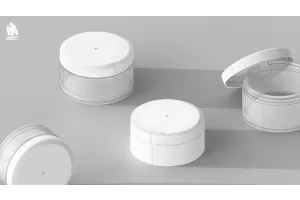
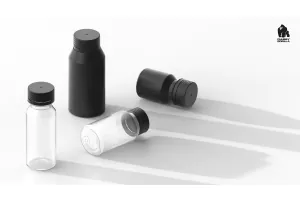
The containers built around it, including Chubby Gorilla®'s Aviator and Spiral lines, are available across bottle, jar, tube, and cartridge formats. Buyers evaluating smart cap technology against a competing closure should ask their supplier to walk through the mechanism the way this article did, not just hand over a certification letter.
Comparing Container Styles Next
For teams weighing container styles once the closure decision is settled, our comparison of Chubby Gorilla®'s Aviator and Spiral lines walks through which body format fits which product category.
Frequently Asked Questions
Question 1: Is SmartCap certified as a child-resistant closure under CPSC standards?
Answer: Chubby Gorilla®'s SmartCap-equipped containers are designed and tested against the 16 CFR 1700.20 protocol that governs child resistant closures in the US. Confirm current test documentation for your specific SKU and configuration before final packaging approval, since certification applies to the full container-and-closure assembly, not the cap alone.
Question 2: What's the difference between SmartCap and standard child-resistant caps?
Answer: Standard child resistant caps typically require a push-then-turn sequence completed in separate steps. SmartCap uses a spring suspension that links pressing and turning into one continuous motion, and applies the tamper-evident band during that same motion rather than as a separate assembly step.
Question 3: Does smart cap technology work the same way across bottles, jars, and tubes?
Answer: Yes. The underlying rotational suspension mechanism is consistent across Chubby Gorilla®'s Aviator and Spiral product families, whether it's built into a jar, a bottle, a tube, or a 510-cartridge container. What changes between formats is the body shape and mouth width, not the closure mechanics.
Question 4: Can SmartCap closures be reused without losing their child-resistant function?
Answer: The spring suspension mechanism is designed to reset with every open-and-close cycle, so the child-resistant function isn't a one-time feature that wears out after first use, unlike some friction-fit or adhesive-based tamper solutions.
Specifying child resistant closures isn't just a compliance checkbox. It's a decision that touches line speed, return rates, and how a customer experiences your product on first open. Understanding what SmartCap's spring suspension, tamper band, and gapless seal actually do mechanically gives packaging buyers a clearer basis for choosing among child resistant closures than a feature list alone.

Share on Facebook

Share on X

Share on LinkedIn
Comment(s)
Recent Posts