By continuing to use our site, you agree to our Terms of Service and Privacy Policy. You can learn more about how we use cookies by reviewing our Privacy Policy.

The True Cost of Non-Compliant Packaging: Recalls, Fines, and Brand Damage
- September 18, 2026
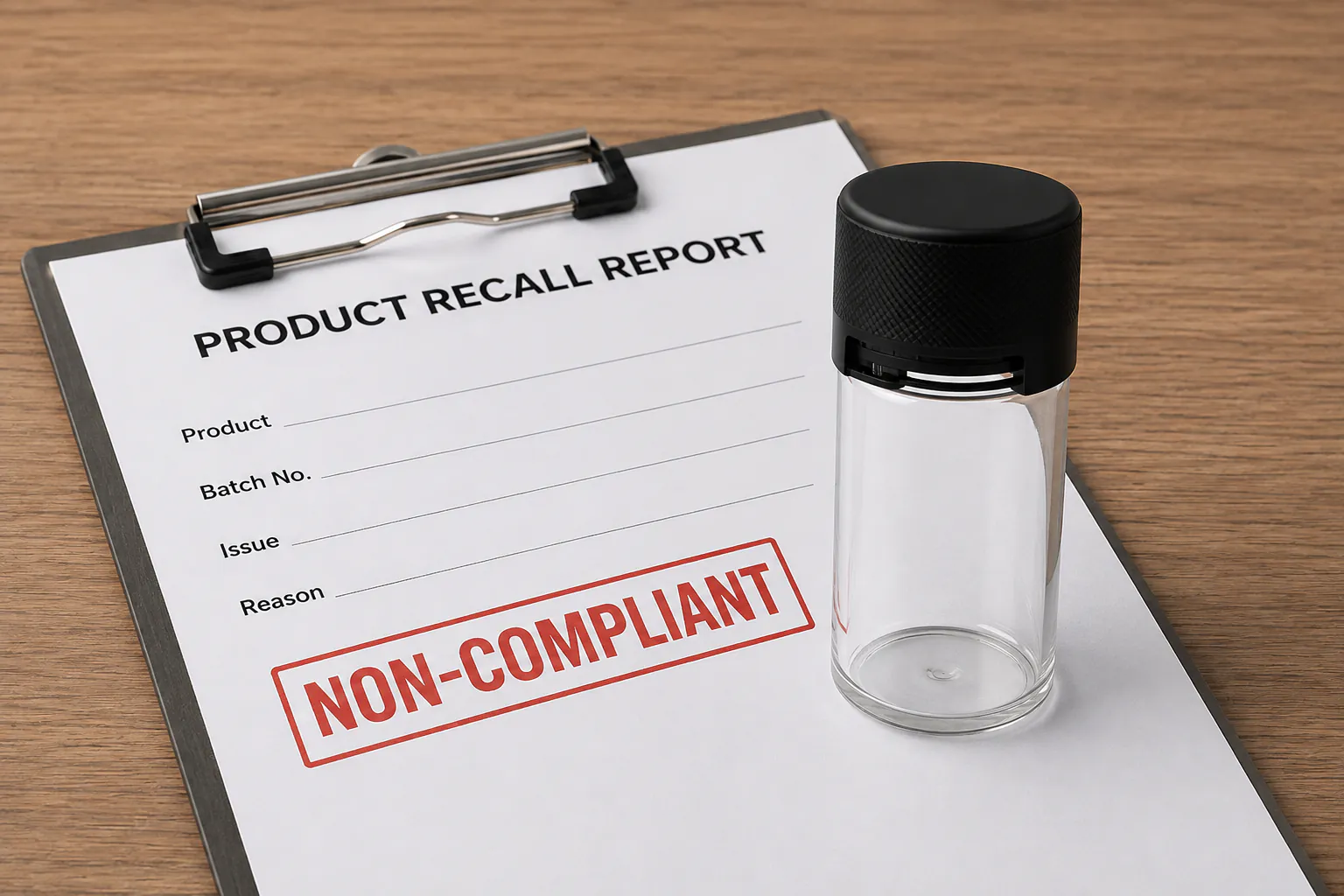
For businesses operating in regulated and safety-sensitive industries, non compliant packaging recall risk goes far beyond the cost of replacing a container or closure. A packaging compliance failure can lead to withdrawn inventory, disrupted distribution, lost retailer confidence, compliance expenses, and lasting damage to the reputation a brand has spent years building.
That makes packaging much more than a final production decision.
For brands selling products such as supplements, plant-wellness products, essential oils, nutraceuticals, or other goods that require additional safeguards, the package is part of the product's safety system. Choosing the wrong packaging can create unnecessary exposure long after the manufacturing process is complete.
Understanding non-compliant packaging risks before products enter the market can therefore protect both the customer and the business.
Why Non-Compliant Packaging Recall Risk Matters
Packaging is often viewed as a combination of branding, storage, and transportation.
In regulated categories, however, it may also have to perform specific safety functions.
Depending on the product and market, these can include:
- Child-resistant functionality
- Tamper-evident features
- Secure closure systems
- Product containment
- Controlled dispensing
- Appropriate labeling areas
- Protection against leaks or contamination
A container can look secure without necessarily being suitable for the product inside it.
This distinction becomes especially important with child-resistant packaging. The closure needs to function as intended during real consumer use rather than merely creating the appearance of additional security.
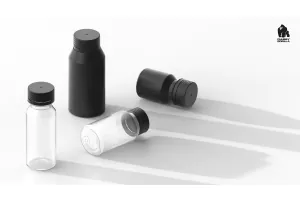
Chubby Gorilla's range of child-resistant bottles, for example, includes packaging formats designed around functional requirements such as child resistance and tamper evidence while supporting different product applications.
Starting with purpose-built packaging reduces the need to retrofit safety features after the rest of the product has already been developed.
The Packaging Itself Can Become a Recall Problem
When brands think about recalls, they often think first about contaminated ingredients, manufacturing problems, or defective products.
But the container itself can become the problem.
If a product requires specific packaging safeguards and those safeguards are missing or ineffective, otherwise usable inventory can become commercially difficult—or impossible—to continue distributing.
That creates an important difference between the cost of packaging and the cost of packaging non-compliance.
Imagine a business that has already:
-
Manufactured thousands of units
-
Filled and sealed those units
-
Printed labels
-
Packed cartons
-
Distributed inventory to wholesalers
-
Shipped products to retailers
-
Sold units directly to consumers
Discovering a packaging problem at that point affects far more than the price of the original container.
The entire downstream supply chain may now be involved.
What Does a Packaging Recall Actually Cost?
There is no single figure that applies to every recall.
The true cost depends on distribution volume, the product category, the remedy required, how widely the product has already been sold, and how quickly the brand identifies the issue.
However, several cost categories appear repeatedly.
1. Lost Inventory
Finished inventory may need to be withdrawn, repackaged, reworked, or discarded.
This means the company is not simply losing the value of the packaging. It may also be losing:
-
Product
-
Labels
-
Filling costs
-
Labor
-
Shipping materials
-
Warehouse handling
-
Distribution expenses
For high-value products, the packaging component can represent only a small fraction of the inventory at risk.
2. Replacement Packaging
A business may then need to source an alternative packaging system.
That can mean additional tooling, testing, transportation, samples, new closures, revised labels, or entirely new containers.
Choosing appropriately engineered packaging earlier in development can help avoid this situation.
Brands considering secure packaging configurations can explore Chubby Gorilla's containers with liners and tamper-evident options as part of the packaging evaluation process.
3. Logistics and Returns
Once products have entered distribution, recovering them becomes considerably more complicated.
Retailers need to be contacted.
Distributors may have inventory across multiple warehouses.
Customers may require refunds or replacements.
Returned products need to be received, sorted, recorded, and processed.
This is why non compliant packaging recall risk grows as a product moves further through the supply chain.
The earlier a packaging issue is identified, the easier it usually is to contain.
4. Production Delays
Replacing packaging can interrupt upcoming production runs as well.
A manufacturer cannot necessarily switch from one packaging system to another overnight.
New containers may need to be sourced, tested, approved, shipped, and integrated into existing filling operations.
That means one packaging issue can affect both current inventory and future revenue.
5. Compliance and Administrative Costs
A packaging problem also creates work across the organization.
Compliance teams investigate.
Operations teams locate affected inventory.
Customer service handles questions.
Marketing prepares communications.
Sales communicates with retailers.
Management assesses the financial impact.
In more serious situations, legal and external compliance specialists may also become involved.
None of this appears in the original packaging cost per unit.
The Hidden Cost: Retailer and Distributor Confidence
For B2B brands, one of the most damaging consequences of a recall can occur behind the scenes.
Retailers want dependable suppliers.
Distributors want products that move through their network without creating additional risk.
When a packaging compliance issue occurs, commercial partners may begin asking additional questions about the brand's processes.
They may require more documentation before taking future inventory.
Some buyers may delay orders.
Others may decide that carrying the product introduces unnecessary complexity.
This is particularly important for emerging brands trying to secure more retail distribution. A recall early in the relationship can weaken confidence at exactly the stage when the company is trying to establish reliability.
Brand Damage Can Outlast the Recall
The largest cost may ultimately be the hardest to calculate.
Trust.
Consumers rarely distinguish between packaging engineering, manufacturing, regulatory compliance, and product formulation.
They see the brand name attached to the issue.
A packaging problem therefore risks becoming a brand problem.
This can be especially damaging for companies whose positioning revolves around:
-
Product quality
-
Wellness
-
Safety
-
Premium ingredients
-
Responsible use
-
Family-conscious storage
-
Technical sophistication
Consumers who believe a brand overlooked a basic safety consideration may begin questioning other aspects of the product as well.
That reputational effect can continue long after affected inventory has been replaced.
Plant-Wellness and Other Emerging Categories Need Extra Attention
The packaging environment becomes even more complicated in newer regulated industries.
A package appropriate for one market should not automatically be assumed to work everywhere else.
The same principle applies when brands introduce:
-
New formulations
-
New container sizes
-
Different closures
-
Additional product categories
-
New distribution territories
Packaging compliance therefore should not be treated as a one-time checkbox.
It needs to remain part of the product development process.
Reducing Non-Compliant Packaging Risk Before Launch
The best way to manage packaging risk is to address it before large quantities of finished inventory exist.
Brands should establish the requirements surrounding the product, determine the functionality needed from the package, evaluate the container and closure together, review supporting documentation, and ensure the packaging remains appropriate as the product evolves.
The packaging supplier should be involved early enough that design and functionality can be developed together.
This is particularly valuable when child resistance and tamper evidence are important.
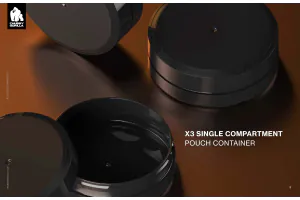
Chubby Gorilla's X3 Pouch Container, for example, combines a child-resistant closure system with an integrated liner and brand customization possibilities.
It illustrates how brands can think about safety, usability, and presentation as parts of the same packaging decision.
Purpose-Built Packaging Versus Retrofitting Compliance
Trying to make a generic container suitable for a regulated product late in development can create unnecessary compromises.
The closure might not complement the container.
The tamper-evident system may interfere with the visual design.
Labels may need to be redesigned.
The user experience can become awkward.
And production timelines may change.
Purpose-built packaging starts from a different premise.
Safety and usability are considered as part of the package itself.
That is why Chubby Gorilla develops packaging across different bottles, containers, and other formats rather than treating child resistance as an accessory added at the end.
Brands can explore the broader range of Chubby Gorilla packaging solutions when identifying formats appropriate for their product.
Conclusion: The Cheapest Recall Is the One That Never Happens
The real non compliant packaging recall risk is not the cost of a cap or container.
It is the chain reaction that follows when packaging fails after production and distribution have already begun.
Inventory can be lost. Production can stop. Retail relationships can become strained. Employees can spend weeks resolving an issue that could have been addressed much earlier.
And the brand may carry the reputational consequences long after the physical products are gone.
Choosing packaging that has been intentionally engineered around safety, usability, and product protection gives brands a stronger starting point.
For companies operating in regulated or safety-sensitive categories, Chubby Gorilla's portfolio of child-resistant, tamper-evident, and customizable packaging solutions can help make packaging part of the risk-management strategy rather than a source of unnecessary exposure.
FAQs About Non-Compliant Packaging Recall Risk
What is non compliant packaging recall risk?
Non compliant packaging recall risk is the possibility that a product may need to be withdrawn, corrected, replaced, or repackaged because its packaging does not satisfy relevant safety or regulatory requirements.
Can child-resistant packaging reduce non-compliant packaging risk?
Child-resistant packaging can address an important safety requirement for products where child resistance is necessary. Brands still need to evaluate the complete product, packaging configuration, intended use, and markets in which it will be sold.
What are the biggest costs of non-compliant packaging?
The cost of packaging non-compliance can include lost inventory, replacement packaging, returns, refunds, production delays, logistics, administrative work, retailer disruption, and damage to customer trust.
When should brands evaluate child-resistant packaging?
Ideally, child-resistant packaging should be considered during product development rather than immediately before production. Early evaluation gives brands more flexibility around container design, closures, labeling, filling, and branding.

Share on Facebook

Share on X

Share on LinkedIn
Comment(s)
Recent Posts